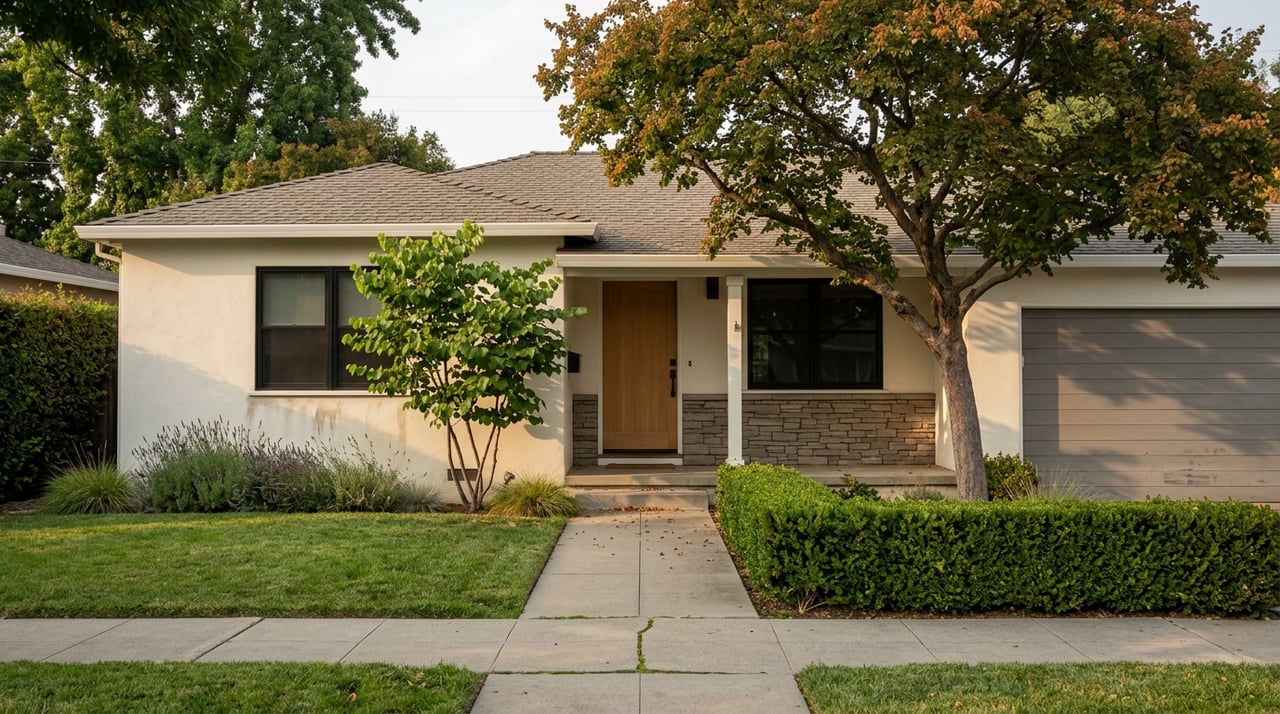
If your house feels bigger than your needs but you still want to stay close to the Saratoga lifestyle you love, you are not alone. Many empty nesters start thinking about less upkeep, easier daily living, and a better fit for this next chapter, only to realize that downsizing in Saratoga is not always simple. With high home values, limited housing variety, and important tax details to weigh, a smart plan matters. Let’s dive in.
Why downsizing in Saratoga is unique
Saratoga offers a setting that many long-time owners do not want to leave behind. The city describes itself as a community of about 31,000 with a semi-rural character and a historic Village downtown, while its 2040 General Plan emphasizes preserving a predominantly small-town residential feel and supporting commercial viability in key areas. That combination can make Saratoga especially appealing if you want a quieter lifestyle without giving up local conveniences.
At the same time, downsizing here does not always mean a low-cost move. According to U.S. Census QuickFacts for Saratoga, the owner-occupied housing rate is 86.4%, median owner-occupied value is above $2 million, and median monthly owner costs remain high with or without a mortgage. In practical terms, moving to a smaller home in Saratoga may reduce space and maintenance, but it may not reduce your housing costs as much as you expect.
Start with your downsizing goal
Before you compare properties, define what “downsizing” actually means for you. For some homeowners, it means less square footage and less yard work. For others, it means staying in Saratoga while simplifying daily life, improving walkability, or choosing a home that may work better over time.
A few common goals tend to shape the search:
- Lower exterior maintenance
- Easier one-level or simpler floor plans
- Closer access to services and activities
- A more manageable monthly budget
- A home that supports aging in place
- Flexibility to travel more often
When you know your real priority, it becomes much easier to sort through options that may look similar on paper but feel very different in daily life.
Understand Saratoga housing options
One of the biggest realities to weigh is housing supply. Saratoga’s housing stock is still dominated by detached homes. The city’s housing data shows that 83.8% of homes were single-family detached in 2020, while attached and multifamily housing made up a much smaller share.
That matters because downsizers often hope to move into a townhome, condo, or other lower-maintenance property. Saratoga does allow townhomes, condominiums, apartments, and mixed-use residential forms in certain districts, but the city remains predominantly low-density and single-family in character. In other words, attached-housing options do exist, but they are more limited than in nearby denser communities.
Detached home vs. attached home
If you are deciding between keeping a detached house or moving to a condo or townhome, the tradeoffs are usually straightforward.
A detached home may offer:
- More privacy
- More storage and outdoor space
- Greater control over the property
- Fewer shared rules
A condo or townhome may offer:
- Less exterior upkeep
- Smaller, easier-to-manage interiors
- Potentially simpler lock-and-leave living
- Shared maintenance responsibilities
But lower maintenance does not mean fewer costs across the board. The Consumer Financial Protection Bureau notes that ownership costs may include property taxes, insurance, and HOA dues where applicable. That is why it helps to compare total monthly costs, not just purchase price.
Look beyond square footage
A successful downsize is often more about lifestyle than size. You may find that a home with slightly more square footage works better if it has a simpler layout, fewer stairs, or better proximity to your regular routines.
As you evaluate homes in Saratoga, think about how you want a typical week to feel. Consider whether you want easy access to coffee shops, parks, community programs, medical appointments, or grocery runs. The right fit often comes down to convenience, not just the number on the floor plan.
Test walkability block by block
Walkability can be a major priority for empty nesters, but Saratoga should be evaluated carefully rather than by assumption. The city notes that its transportation system was originally built on rural-community principles and still includes gaps in sidewalks, even as it works to improve pedestrian access and crosswalks. That means walkability can vary significantly from one pocket to another.
If being able to walk more often is important to you, visit at different times of day and test the actual route from a property to the places you would use most. A home that looks close on a map may feel very different once you factor in sidewalk gaps, street crossings, or topography.
Village and civic-area convenience
For many buyers, the center of gravity is Historic Saratoga Village. The city describes the Village as the heart of Saratoga, with dining, shops, galleries, coffee houses, parks, and trails. City Hall, the Saratoga Library, and the Joan Pisani Community Center are also in the 95070 ZIP code, and the city notes that Saratoga has 14 parks and numerous trails.
If your goal is to be closer to activities and services, focusing on convenience to these areas can be more useful than searching by square footage alone.
Consider support and aging-in-place options
Downsizing is not only about today. It is also about choosing a setup that can work well for the next stage of life.
Saratoga has meaningful resources for older adults. The Saratoga Area Senior Coordinating Council says the Saratoga Senior Center offers social groups, fitness classes, learning activities, games, and twice-monthly luncheons. SASCC also offers the RYDE program, which provides curb-to-curb transportation for adults 65+ for appointments, grocery shopping, and other local trips.
For some households, that local support may make it easier to stay in a traditional home longer. For others, a community with more built-in services may be a better fit. The city notes that the Saratoga Retirement Community includes independent living, assisted living, and skilled nursing beds, which may appeal to buyers who want a more service-oriented environment.
Know the property tax implications
Property taxes can be one of the most important parts of a downsizing decision in California. If you have owned your current home for many years, your existing tax base may be far lower than what you would pay on a newly purchased home. That can make a smaller home feel more expensive than expected.
The California State Board of Equalization says Proposition 13 generally limits the property tax rate to 1% plus voter-approved bonded indebtedness and caps most annual assessment increases at 2%. Santa Clara County also offers a homeowner’s exemption that reduces assessed value by $7,000 on an owner-occupied principal residence, usually saving about $70 to $80 per year.
How Prop 19 may help
For many empty nesters, Prop 19 is the key planning tool. The Santa Clara County Assessor says eligible homeowners who are at least 55, severely disabled, or disaster victims may transfer their Proposition 13 base-year value to a replacement principal residence anywhere in California, up to three times.
If the replacement home is of equal or lesser value, the transferred tax base generally carries over without adjustment. If the new home costs more, the difference is typically added back into the assessment. This can make a Saratoga move much more workable for long-time owners who want a better lifestyle fit without starting from scratch on taxes.
Do not forget supplemental taxes
Another cost that can catch buyers off guard is the supplemental assessment. According to the Santa Clara County Assessor’s guidance on supplemental assessments, a new owner may receive a supplemental tax bill based on the difference between the prior assessed value and the new purchase-date value.
This is separate from standard escrow prorations. So when you budget for a move, it is wise to account for first-year costs that may be higher than a simple mortgage estimate suggests.
Plan your sale and purchase timing
Timing matters when you are selling one home and buying another. Many homeowners prefer to sell first before buying again, and the CFPB notes that this is the most common path. Selling first can help you understand exactly how much equity you have available and reduce the risk of carrying two homes at once.
That said, timing is not always one-size-fits-all. If you qualify for Prop 19, the Santa Clara County Assessor notes that you may buy first or sell first, as long as both transactions are completed within two years. That flexibility can be especially helpful if you want to secure the right replacement property before listing your current home.
Questions to sort out early
As you build your plan, it helps to answer these questions early:
- Do you want to stay in Saratoga, or are you open to nearby areas?
- Is lower maintenance more important than lower monthly cost?
- Would a one-level layout improve day-to-day living?
- How important is proximity to the Village or community services?
- Do you expect to use Prop 19?
- Would you prefer to sell first or buy first?
- Do you need a rent-back after closing to make the move easier?
The CFPB also notes that escrow or settlement handles the legal transfer of title at closing, while practical coordination usually comes down to escrow dates, move-out timing, and tax paperwork. If you need extra time after closing, a rent-back can help bridge the gap, but it should be negotiated rather than assumed.
Common Saratoga downsizing paths
There is no single right way to downsize in Saratoga. In practice, most homeowners tend to fall into one of a few paths.
Stay and simplify
Some empty nesters decide not to move at all. Instead, they update the home, reduce unused space, simplify maintenance, or create a more comfortable long-term setup. This can make sense if you love your location and your current tax base remains hard to beat.
Move to attached housing
Others look for a condo or townhome that offers less maintenance and a simpler lifestyle. Saratoga’s housing report notes that formats such as townhomes and other “missing middle” housing types can create more options for seniors who want to downsize and age in place. These properties can be appealing, but the local supply is limited, so availability may shape your timing.
Choose a service-oriented community
For homeowners who want support built into the living environment, a retirement community setting may be worth exploring. This path can prioritize convenience, continuity of care, and fewer day-to-day housing responsibilities.
Focus on fit, not just less
The best downsizing decision is rarely about choosing the smallest home possible. It is about choosing a home that fits your routines, finances, and long-term plans more closely than the one you have now.
In Saratoga, that means weighing a few realities at the same time: high housing costs, limited attached-home inventory, uneven walkability, and potentially meaningful tax advantages for eligible homeowners. When you take time to compare lifestyle tradeoffs alongside financial ones, you are much more likely to make a move that feels right both now and later.
If you are thinking about downsizing in Saratoga, working with a local expert can help you compare options, model timing, and understand how your sale and next purchase fit together. When you are ready to talk through your goals, connect with Lindsay Hogan for thoughtful guidance tailored to your next chapter.
FAQs
What should empty nesters in Saratoga weigh first when downsizing?
- Start with your main goal, such as reducing maintenance, improving convenience, lowering monthly costs, or finding a home that works better for aging in place.
Are there many condo and townhome options in Saratoga for downsizers?
- Saratoga does offer attached housing options, but the city’s housing stock is still dominated by single-family detached homes, so inventory is generally more limited than in denser nearby communities.
How walkable is Saratoga for empty nesters buying a smaller home?
- Walkability varies by area, and the city notes there are still sidewalk gaps in some places, so it is best to test specific routes in person rather than assume a home is walkable based on a map.
Can Proposition 19 help Saratoga homeowners downsize?
- Eligible homeowners age 55 or older, as well as certain other qualifying groups, may be able to transfer their property tax base to a replacement principal residence in California, subject to Prop 19 rules.
What local services support older adults in Saratoga?
- Saratoga offers senior-focused resources including programs through the Saratoga Senior Center and curb-to-curb transportation through SASCC’s RYDE program for adults age 65 and older.